.png)

Period Myths and Misconceptions
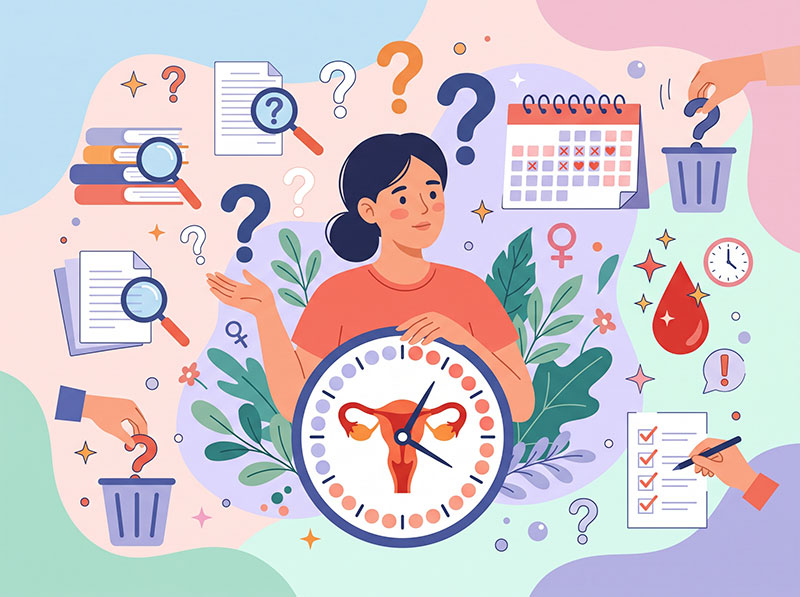
In recent times, the topic of menstruation and period poverty has gained much attention on mainstream media. Yet, despite advances in education, healthcare and technology, conversations about periods remain embedded in myths, misconceptions and stigma. In Sri Lanka and many of our South Asian neighbours, cultural beliefs are passed down through generations and often shapes attitudes towards menstruation. This influences not only how menstruators perceive their bodies, but also their place in society.
Understanding and challenging myths is essential to improve menstrual health and to promote dignity, gender equality and well-being. Discussed below are six commonly heard menstruation myths.
Myth 1: Menstruating women are “impure”
The words impure and unclean are commonly used to describe women during their periods. This has led to restrictions on entering places of worship, participation in religious ceremonies, daily chores around the house and even interactions with family members during menstruation.
The truth is that menstruation is a natural biological process, and menstrual blood is not toxic or impure. Menstrual blood contains the shed uterine lining when pregnancy does not occur, along with mucous and the unfertilized egg. Treating menstruation as a source of shame can contribute to anxiety, low self-esteem and secrecy around menstrual health.
Myth 2: Do not bathe during a period
Many menstruators are told to avoid washing their hair or bathing during menstruation as they believe that cold water disrupts menstrual flow and can cause future health problems. However, regular bathing to maintain good menstrual hygiene is important. Regular bathing helps keep the body clean, reduces discomfort and can even relieve cramps for some women. There is no medical evidence that bathing during menstruation is harmful.
Myth 3: Do not exercise during a period
Exercise is beneficial when menstruating. Light activities such as walking, yoga, swimming and Pilates can help reduce cramps, improve mood and boost energy levels. When girls are discouraged from participating in sports because of their periods, they may miss opportunities for physical development, confidence-building and social engagement.
Myth 4: Must avoid certain foods during your period
Foods such as pineapple, curd, fish, eggs and spicy meals are often discouraged during menstruation for a variety of beliefs including claims that bleeding may increase or pain worsens. However, there is no medical evidence to support any dietary restrictions during menstruation.
Menstruators should have a balanced diet rich in protein, iron, fibre, fruits and vegetables throughout their menstrual cycle.
Myth 5: You can’t swim on your period
It is possible to swim on your period and swimming can help relieve menstrual cramps. Due to the external water pressure, menstrual blood does not flow out of the vagina whilst in water. It is important however to use the correct type of menstrual product such as a tampon or menstrual disc or menstrual cup, to absorb/store the menstrual blood in the vaginal cavity.
Myth 6: You can’t touch or go near plants when on your period
There is no evidence to suggest that menstruating women will cause plants to wither and die, prevent seeds from germinating or affect crop growth. Menstruation is a normal biological process that does not change a person’s ability to garden, cook or participate in daily activities.
Periods are not a source of shame, impurity or weakness. The myths discussed above are just a few of the many menstrual myths circulating in Sri Lanka. By replacing myths with facts, communities can empower menstruators to approach menstruation with confidence rather than fear. Everyone deserves accurate information, access to supportive menstrual environments and the freedom to participate fully in education, work, sports, and community life, every day of the month.
Have you heard of a rumour or taboo about menstruation? Clarify it with a medical professional and correct misconceptions. Please contact Bloom Medical Clinic at the Family Planning Association of Sri Lanka to speak to a healthcare professional (+94 779895252, No. 37/27, Bullers Lane, Colombo-07).
The Family Planning Association of Sri Lanka
எங்களிடமிருந்து வரும் சமீபத்திய செய்திகளைப் பெற குழுசேரவூம்