.png)
Sri Lanka Takes a Historic Step Toward a National Harm Reduction Response
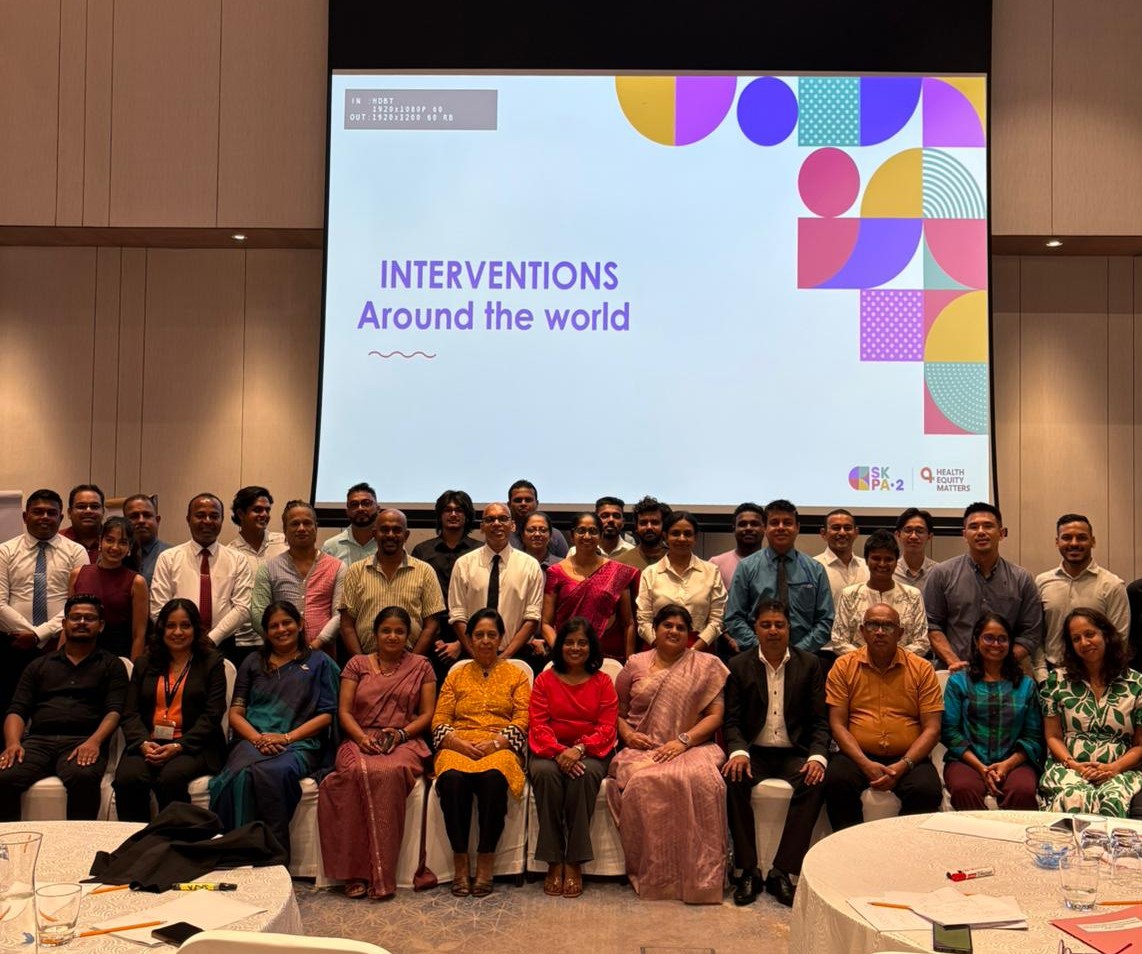
In June 2026, FPA Sri Lanka, together with the National STD/AIDS Control Programme (NSACP) and Health Equity Matters, convened the National Workshop on Expanding Harm Reduction and Chemsex Interventions in Sri Lanka at Courtyard by Marriott, Colombo. Funded through the SKPA-2 programme supported by the Global Fund, this two-day workshop marked a significant milestone in Sri Lanka's HIV response.
The workshop brought together over 45 senior stakeholders from government ministries, law enforcement, the Sri Lanka College of Psychiatrists, the National Dangerous Drugs Control Board, the Department of Prisons, civil society organisations, and community representatives. Its principal facilitator was Mr. Palani Narayanan, a senior harm reduction specialist and Director of the Drug Policy Program in Malaysia, supported by an international and national facilitation team.
Why This Workshop Was Necessary
Sri Lanka is among a small number of countries where HIV incidence continues to rise. Evidence presented at the workshop painted a concerning picture: methamphetamine arrests have increased by more than 2,800% between 2019 and 2024; 10.7% of men who have sex with men reached by community outreach reported engaging in chemsex; 75% of methamphetamine users in the Colombo District inject, and 31.7% of those share needles. Yet Sri Lanka has no national needle and syringe programme, limited mental health integration within HIV services, and a legal framework that continues to criminalise both drug use and consensual same-sex relations.
The workshop was designed to build consensus across sectors that rarely sit together in the same room, and to develop a practical, evidence-informed roadmap for the national response.
What the Workshop Established
Day one focused on building a shared understanding of chemsex and harm reduction in the Sri Lankan context, drawing on local data, regional case studies, and legal analysis. Ms. Ambika Satkunanathan, international human rights law expert and former Commissioner of the Human Rights Commission of Sri Lanka, identified existing provisions within the Poisons, Opium and Dangerous Drugs Ordinance that already permit the lawful distribution of sterile injecting equipment under Ministry of Health authorisation, without waiting for legislative reform.
Day two moved to solutions. Participants agreed on a concrete roadmap across four areas: legal and policy review, priority interventions, standard operating procedures and memoranda of understanding, and financing and sustainability.
The most significant outcome was a consensus decision to immediately establish a National Working Group on Harm Reduction. Each ministry and stakeholder institution represented at the workshop will nominate a representative. The Working Group will operationalise the workshop recommendations and lay the groundwork for a formal National Task Force. SKPA-2 has committed to funding a dedicated coordinator for six months and a legal audit to identify actionable pathways within the current legal framework.
Priority Recommendations
- Establish the National Working Group immediately, with a National Task Force to follow
- Conduct a legal audit and develop inter-ministerial MoUs and ministerial circulars to enable harm reduction services within existing law
- Integrate chemsex-specific services into HIV and STI programmes
- Expand PrEP access and explore injectable PrEP
- Strengthen surveillance and integrate chemsex-specific indicators into national outreach tools
- Invest in structured capacity building across government, clinical, community, and law enforcement sectors
- Map domestic financing pathways to ensure sustainability beyond donor funding
FPA Sri Lanka's Role
FPA played a central role in convening, facilitating, and anchoring the workshop outcomes. As co-organiser and as part of the facilitation team, FPA ensured that community voices were integral to the discussions and that the workshop produced actionable rather than aspirational outcomes. The formation of the National Working Group, and FPASL's ongoing role within it, reflects the organisation's commitment to structural change grounded in rights, evidence, and community leadership.
අලුත්ම තොරතුරු ලබාගැනීමට එක්වන්න