.png)


IPPF Stream II: Sex Work Policy Consortium Project (2025-2027)
Project Overview
The IPPF Stream II: Sex Work Policy Consortium Project is a two-year (2025-2027) multi-country initiative supported by the International Planned Parenthood Federation (IPPF) to strengthen the rights, health, safety, and agency of sex workers across the region.
In Sri Lanka, the project is led by The Family Planning Association of Sri Lanka (FPASL) and implemented through a national consortium of civil society and community-based organisations:
Community Strength Development Foundation (CSDF)
Heart to Heart Lanka Organisation
Sankranthi Foundation (SF)
Trans Equality Trust Sri Lanka (TETSL)
Each partner organisation contributes based on its community reach, technical expertise, and lived experience, working collaboratively to ensure that interventions are inclusive, rights-based, and responsive to the needs of sex workers across diverse contexts.
The Sri Lanka component focuses on legal empowerment, access to inclusive and non-judgmental health services, policy advocacy, organisational strengthening, and community leadership, while ensuring that sex workers are active participants in shaping responses that affect their lives.
Activities Completed in 2025
In 2025, the project focused on building a strong foundation for legal empowerment, advocacy, and service access.
Legal Empowerment and Advocacy
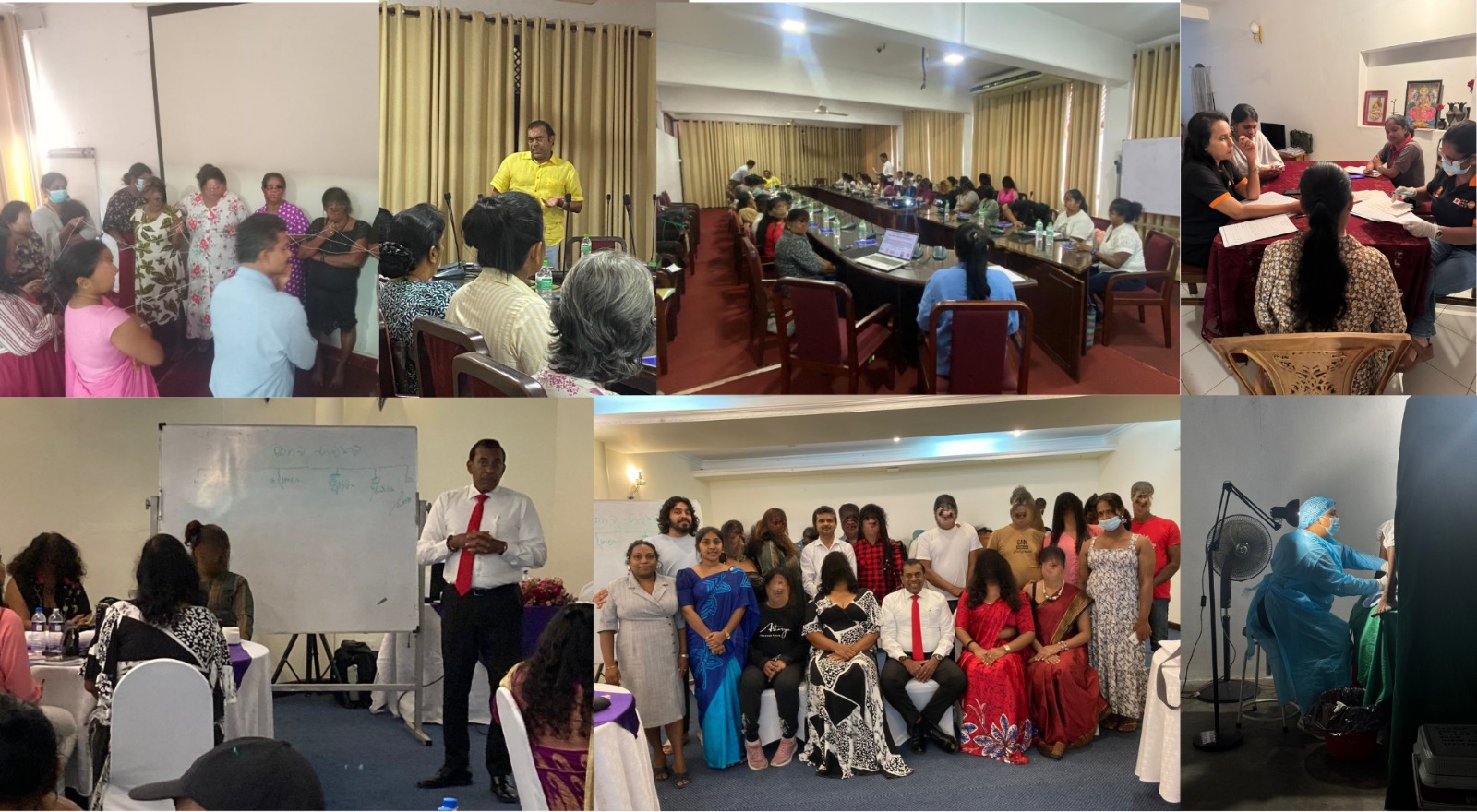
Conducted a two-day residential training programme to strengthen the capacity of project staff from FPASL, CSDF, Heart to Heart, NTN, and TET on laws governing sex work in Sri Lanka
Conducted sensitisation programmes for police and law enforcement officials to reduce harassment and violence against female sex workers
Conducted legal awareness programmes for 100 female sex workers on existing laws, arrest procedures, and rights during detention
Conducted sensitisation programmes for media personnel on the Vagrants Ordinance and responsible reporting
Conducted sensitisation programmes for police officers on issues faced by sexual minorities and discriminatory laws, including Penal Code provisions
Access to Justice and Support Services
Supported and documented court cases involving sex workers
Provided individualised legal assistance, counselling, and psychosocial support to sex workers facing legal and rights-related challenges
Strengthened collaboration with legal aid organisations and the Bar Association to build a network of sensitised lawyers
Ongoing Activities
The following activities are currently ongoing across consortium partners:
Legal case support and documentation for sex workers
Provision of individual legal assistance, counselling, and psychosocial support
A qualitative baseline study to understand barriers, needs, and challenges faced by sex workers in accessing welfare and public services
Awareness programmes on existing government and social services for sex workers, conducted by each partner organisation
Implementation of mobile health clinics, providing comprehensive well-woman services to sex workers, with technical support from FPASL
Provision of follow-up medical services at FPASL clinics for sex workers identified through screening
Planned Activities for 2026
In 2026, the project will scale up advocacy, service delivery, and sustainability-focused interventions.
Legal Reform and Advocacy
Development, printing and dissemination of fact sheets to sensitise key stakeholders on the Vagrants Ordinance and its implications
Sensitisation programmes for police, law enforcement officials, media personnel, and parliamentarians on discriminatory laws and proposed amendments
Establishment of a Technical Advisory Committee comprising legal experts, human rights advocates, and practitioners to support law reform efforts
Collaboration with legal experts and human rights organisations to draft proposals for amendments to discriminatory laws, including the Vagrants Ordinance
Stakeholder consultations to strengthen advocacy for amendments to the Vagrants Ordinance and related laws
Health and Welfare Access
Continued mobile clinic services reaching 1,500 sex workers, with referrals for further care
Expanded access to follow-up medical services at FPASL clinics
Continued awareness programmes on welfare schemes and public services
Community Leadership and Economic Sustainability
Entrepreneurship and business development workshops for sex workers across partner organisations
Development and submission of high-level organisational business proposals
Provision of organisational grants to support shared community assets
Establishment of seed grants to support sex workers to start or expand small businesses
Financial literacy, savings, investment, and marketing training programmes
Monthly organisational progress review meetings
Development and strengthening of organisational websites
Development of organisational policies and standard operating procedures
Project Approach
The project adopts a rights-based, community-informed approach that prioritises dignity, safety, participation, and sustainability. Continuous learning, coordination, and adaptation are built into implementation to ensure the project remains responsive to the lived realities of sex workers in Sri Lanka.
අලුත්ම තොරතුරු ලබාගැනීමට එක්වන්න